Recall, Safety Warning, Lawsuit: Knowing Which Is Which
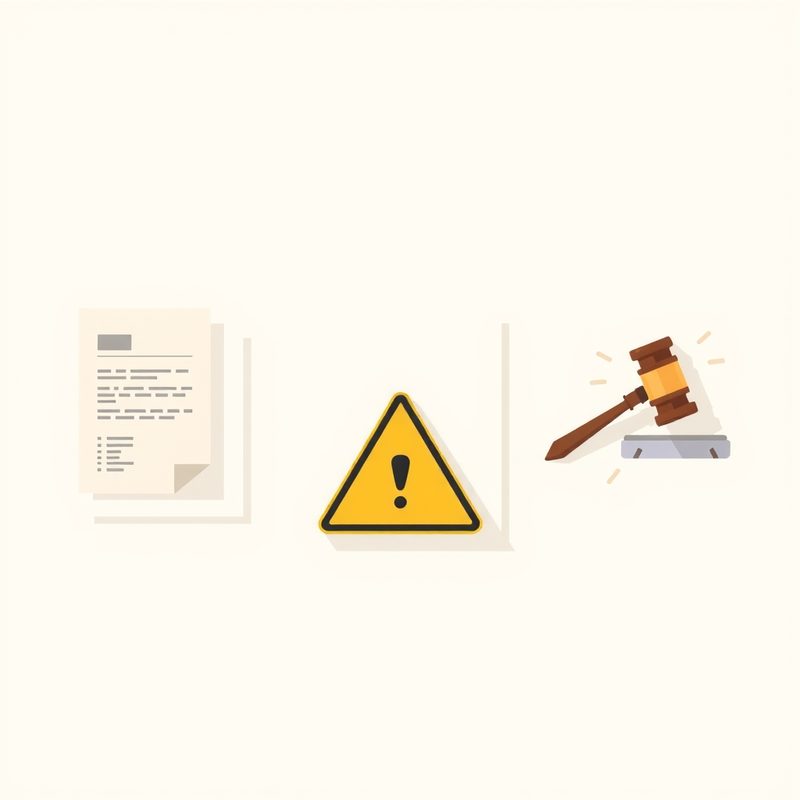
News coverage collapses several distinct events into one phrase: “there’s a problem with this product”. The distinctions matter because the consequences are different — who must act, who pays, and what you can claim.
A recall: the manufacturer acts
A recall is a formal process. A company accepts that a product in the market has a defect, commits to a remedy, and — in the US system — the relevant agency records and publishes it. There is a remedy attached: refund, repair, replacement, or a stop-use instruction.
What you get: a defined remedy, usually without litigation, usually without a receipt, and a public record you can point to.
What it is not: an admission of negligence, an obligation to compensate for past harm, or a guarantee that the product was withdrawn from sale everywhere.
A safety warning: information without a remedy
Agencies also publish warnings and alerts that are not recalls: a pattern of incidents that does not meet the threshold for recall action, a counterfeit product, a hazard that arises from misuse, or an imminent-hazard announcement while an investigation continues.
What you get: information. Sometimes a strong recommendation to stop using a product.
What you do not get: an automatic remedy. If a warning concerns a product you own and there is no recall, your route is the retailer, the manufacturer’s warranty, or your own consumer protection framework — not a remedy programme.
The practical value of a warning is early warning: it is often the signal that a recall is coming.
A lawsuit: private parties, private outcome
Lawsuits, class actions and settlements are between private parties. They may follow a recall, they may cover injuries a recall cannot address, and their terms bind only those who are part of the settlement class.
What you get: whatever the settlement provides, if you are included and you claim it.
What you should not expect: that a lawsuit replaces the recall. A settlement notice and a recall notice are separate processes, and being eligible for one does not mean you have claimed the other.
The distinguishing question
Ask who is obliged to do something:
- Recall — the manufacturer is obliged to offer a remedy. You act to claim it.
- Warning — nobody is obliged to remedy anything. You act to protect yourself.
- Lawsuit — the parties are obliged to each other, and only if you join the class or the settlement covers you.
Where confusion costs money
The most common error is treating a safety warning as if it were a recall: waiting for a refund that does not exist, or continuing to use a product because “there is no recall”. The second most common is treating a recall as if it were a lawsuit: assuming the remedy is a starting point for compensation, when it is the whole of what the process offers.
There is also a version of this that affects how people read our alerts. We publish recall notices and their summaries. We do not publish warnings we have not seen in the source data, and we do not report litigation. If a product you own appears in a news story, the useful next step is to check whether an official recall exists — our list is a quick way to do it, because it is built directly from the agency feeds.
One habit that resolves the ambiguity
Go to the source. A recall notice is a document with a remedy, a hazards section and an identification section. A warning is an announcement. A lawsuit is a court filing. Reading which of the three you are holding takes a minute and tells you exactly which rights you have.
Alerts help with the first category only — and that is the category where a deadline and a remedy usually exist. Set one up here if you want to hear about recalls as they are published.
Sources: CPSC recalls · openFDA enforcement reports